Tuesday, March 26, 2013

Tooth Growth & Development


What's the difference between "baby" teeth and permanent teeth? At between six and ten months of age, most infants begin to get their "baby" teeth.
The Central Incisors (front middle teeth) usually come in first, and then teeth begin appearing on either side and work their way back to the second molars. By the time a child has reached three years old, most of the "baby" teeth should be present.
The process begins to repeat itself when the child is about seven years old. The Central Incisors fall out first and are replaced by permanent teeth. By the age
of 21, most people have all of their permanent teeth.

Diagram of First Teeth

"Baby" teeth are important because they hold the place for permanent teeth and help guide them into correct position. "Baby" teeth play an important role in the development of speech and chewing.


Next on this Topic 

Different types of teeth and what do they do

What are the parts of a tooth?


Tuesday, March 12, 2013

Hybrid human tooth grown in mouse


Hybrid human tooth grown in mouse


iol scitech march 12 hybrid tooth
REUTERS
This handout picture taken in 2010 shows a bioengineered tooth unit grown by researchers at Tokyo University of Science, using mouse stem cells.
London - Scientists have taken a step closer to growing human teeth from scratch using cells taken from a patient's mouth. They now envisage missing or diseased teeth could one day be replaced by freshly grown, living substitutes.
A “hybrid” tooth made from a mixture of human gum cells and mouse embryonic cells has been grown in laboratory mice to test a method that might in the future be adapted to become an alternative to dental implants.
Researchers believe growing bio-engineered teeth from a patient's own cells could revolutionise dentistry, which in recent years has focused on replacing damaged or missing teeth with porcelain crowns attached to metal implants inserted into the jaw.
“The idea is to identify cells you can put together and will grow into an immature tooth, which will develop into a mature tooth after it is inserted into the patient's mouth,” said Professor Paul Sharpe of King's College London. The “bio-tooth” produced by mixing human gum cells with embryonic mouse cells formed viable roots with good periodontal ligaments - the tissue fibres anchoring teeth to the jawbone, he added.
As well as anchoring teeth, the periodontal ligaments act as shock absorbers during chewing. Metal implants are fixed to the bone and do not have shock absorbers, which can damage the jawbone over time, he said. The study, published in the Journal of Dental Research, is the first demonstration of a tooth grown using human and mouse cells. - The Independent

Saturday, February 2, 2013

Dental facts


8 Amazing Dental facts your Dentist didn’t tell you


Dental health is quite intriguing. There are plenty of myths around that we blindly believe and follow. Dental health is a whole science in itself and there is a lot more to it than appears so. Here are some interesting facts that an average person does not know about dental health.
  • The commonly used practice of putting a cap on toothbrush is actually more detrimental. The moisture entrapped in the cap favors bacterial growth.
  • You are not supposed to brush within 6 feet of a toilet. The airborne particles from the flush can travel up to a distance of 6 feet.
  • 75% of the United States population suffers from some stage of periodontal gum disease.
  • People who tend to drink 3 or more glasses of soda/pop daily have 62% more tooth decay, fillings and tooth loss than others.
  • The first toothbrush with bristles was manufactured in China in 1498. Bristles from hogs, horses and badgers were used. The first commercial toothbrush was made in 1938.
  • Fluoridated toothpastes when ingested habitually by kids can lead to fluoride toxicity.
  • You are supposed to replace your toothbrush after you have an episode of flu, cold or other viral infections. Notorious microbes can implant themselves on the toothbrush bristles leading to re-infection.
  • New born babies do not have tooth decay bacteria. Often, the bacteria are transmitted from mother to baby when she kisses the child or blows in hot food/drink before feeding the baby.


Get paid to share your links!


Tooth Development and Weaning in Chimpanzees Not as Closely Related as Once Thought

Jan. 28, 2013 — For more than two decades, scientists have relied on studies that linked juvenile primate tooth development with their weaning as a rough proxy for understanding similar developmental landmarks in the evolution of early humans. New research from Harvard, however, is challenging those conclusions by showing that tooth development and weaning aren't as closely related as previously thought.


Using a first-of-its-kind method, a team of researchers led by professors Tanya Smith and Richard Wrangham and Postdoctoral Fellow Zarin Machanda of Harvard's Department of Human Evolutionary Biology used high-resolution digital photographs of chimps in the wild to show that after the eruption of their first molar tooth, many juvenile chimps continue to nurse as much, if not more, than they had in the past. Their study is described in a January 28 paper in the Proceedings of the National Academy of Sciences.
"When these earlier studies were published about 20 years ago, they found a very tight relationship between the eruption of the first molar and certain developmental milestones, particularly weaning," Smith explained. "A number of researchers have tried to extrapolate that relationship to the human fossil record, but it now appears that our closest living relative doesn't fit that pattern. That suggests we should be more cautious if we want to infer what juvenile hominins were like."
Getting an inside view of chimpanzee childhood, however, is no easy task.
Most prior studies of tooth development in juvenile chimps relied on two methods of collecting data -- observing captive animals or studying skeletal remains of wild primates. Both, however, also came with challenges for researchers.
Studies have shown that captive chimps grow dramatically faster -- often reaching adult size by age 10 or 11, compared to 13 to 15 for wild chimps. That early development means the milestones researchers rely on as proxies for understanding early human species likely occur earlier than they normally would. Researchers studying skeletal remains of wild primates face a similar challenge. To properly understand those developmental landmarks, remains must be properly identified and aged, a notoriously difficult process for primates in dense tropical forests.
To solve those problems, Smith, Wrangham and Machanda developed a unique method for studying juvenile chimps in the wild. Researchers studying the Kanyawara chimpanzee community in Kibale National Park in Uganda teamed up with wildlife photographers who snapped photos of juvenile chimp's teeth whenever they opened their mouths. The detailed photos, some of which captured the same individuals over months, allowed researchers to track precisely when molars erupted, and to correlate that information with chimp's behavior more closely than ever before.
What the images revealed, Smith and Machanda said, came as a surprise.
Where earlier studies suggested that juvenile primates were weaned shortly after their first molar erupts, their study showed that, in addition to eating more solid food, chimps continued to "suckle as much, if not more, than they had before," Smith said. "They were showing adult-like feeding patterns while continuing to suckle, which was unexpected."
While questions of why juvenile chimps continue to nurse -- in some cases for months -- have yet to be answered, Machanda said those questions will likely be the subject of future studies.
"We're now working on a project that's focused on body size and growth, but we're also planning future studies that will look at their energetic condition so we can understand what they're trying to get from the mother by continuing to nurse," she said. "What's interesting, however, is that there can be conflict surrounding this where the juveniles are trying to get as much as possible from the mother and the mother is actually covering up her nipples and moving around. Sometimes they'll even throw these temper tantrums that look exactly like human babies."
"I think there are two bottom lines here," Smith said. "One, I think, is a cautionary tale. The findings in this paper are going to challenge us to find other proxies for weaning and the spacing between offspring, but the other aspect that's exciting is that we have some suggestion that we should start looking at how feeding behaviors develop in the wild.
"No one has looked at how infants become more adult-like, both in their food choice and in the time they spend feeding," she continued. "This actually appears to correlate fairly well with dental development, so, while this is a preliminary finding, we may have a new anatomical proxy for when juvenile primates begin eating like adults."

Tuesday, January 29, 2013


In some California counties, finding a dentist is like pulling teeth

Several areas in the state have dire shortages. In Alpine County there are no dentists, and Inyo County has one for 5,000 people, according to a report by the UCLA Center for Health Policy Research.

Have a toothache in Alpine County? Tough luck. There are no active dentists there, making it the most underserved dental population in California, according to a report released Thursday by the UCLA Center for Health Policy Research.

The 700-square-mile mountainous region is one of several counties with severe dentist shortages. San Benito and Inyo counties have less than one dentist per 5,000 people; Imperial and Colusa counties have less than one dentist per 4,000. Even some poorer parts of Los Angeles County are considered underserved, said Nadereh Pourat, director of research planning at the UCLA School of Public Health and the report's primary author.

"In some areas, particularly when they're rural, you're talking about having to travel a long way before you can find a dentist," Pourat said. "And if you don't have dental insurance, you have to pay out of pocket in order to find a dentist willing to accommodate you."

In Hollister -- located in San Benito County, where the UCLA data show only five working dentists serving nearly 58,000 residents -- Dr. Mark Stephens said he's been able to handle the demands on his practice, so far.

"If someone calls with a toothache, we try to see them the same day, but some offices don't see them for a week or two," Stephens said. "If I have to work through lunch or stay late, I will."

Stephens said he thought there were more than a handful of dentists still practicing locally, but added that in the last several months, his brother, who is also a dentist, sold his practice and another dentist died.

Like many dentists, Stephens does not accept Denti-Cal, the state's dental insurance for the poor. He said he knows of only one dentist in Hollister who does.

The shortage situation may worsen in some already-underserved areas because new dentists are not keeping pace with those retiring.

Because dentists often leave school with between $200,000 and $300,000 in loans, setting up practice in areas where patients rely on government-sponsored insurance that pays only 30 to 40 cents on the dollar can be hard, said Cathy Mudge, chief administrative officer of the California Dental Assn.

"They need to be able to repay that loan," she said.

To encourage new dentists to move to needy areas, Mudge said, the association's foundation offers a loan repayment program. In exchange for a three-year commitment in an underserved population, the foundation covers their loan payments during that time.

For Dr. James Forester, who works at La Clinica de Tolosa in Paso Robles, that equals about $35,000 a year in loan payback -- a hefty sum, particularly when he's working at a clinic that pays significantly less than what he could be making elsewhere.

"For me to be able to work in a population where people really need me is ideal," he said. "Who else would be here if I wasn't here? It's a great opportunity, but also a responsibility. These people are here. They need care too."

Friday, January 18, 2013

Begin With Patients In Mind

The life of a dental student is rather selfish, isn’t it?
Seriously, think about it. After countless hours of your day spent in classrooms and clinics, the remainder of your time is usually allocated to studying and lab work. With so much of your schedule and energy monopolized, the most important people in your life get the short end of the stick—a version of you that’s devoid of energy and propped-up just long enough to make an appearance. Home life suffers during an exam-heavy week as dirty laundry and dishes pile up. Plants and pets are lucky to survive a finals week! Though you may not realize it, your decision to pursue a dental degree obligated those around you to years of sacrifice and compromise toward your cause.
I’m a dental student…and it’s all about me!
Now, please don’t take this the wrong way. The nature of the “dental school” beast demands a level of selfishness. It’s a reality all dental students share, and my story was no exception. Like you, my success as a dental student was defined by my ability to improve and advance my skills. It was a system that legitimized self-mindedness, and even rewarded it. For a long time, the primary mission was simply to work on me. Then I entered the private practice world, and all the rules changed.
As associateship interviews approached, I began nailing down a few priority items I was looking for in a prospective practice. The list included a great staff, a boss interested in mentorship, a thriving business with ownership opportunity, and an overall compatibility with the practice philosophy and style. The criterion that rose to the top of my list, however, was “the patient experience”. Thinking about my own experiences as a patient, I wanted to work for an office that, without question, kept its patients as the primary focus.
During the course of interviews, I encountered practices that ran the gamut— a few were more staff-centered or money-centered, and some were, well, “my most recent vacation”-centered. I did find, however, a few offices that seemed to concentrate on the patient experience first and foremost. Fortunately, the opportunity to join one such office arose. In the whirlwind of my transition from residency to private practice, I almost overlooked the true significance of what I had discovered.
There’s only so much a manikin can teach about customer service.
I was beginning a new game, with new rules. In order to succeed in this new system, I would need a whole new mindset. Unlike the student experience, success would no longer be a function of things I did for me. Success, from this point forward, would depend on my ability to be patient-centered.A patient-centric practice philosophy positions the patient as a singular center, and then derives all aspects of the practice from that center. In other words, consideration for the wants and needs of the patient permeates every aspect of practice behavior. A patient-centric philosophy is a simple concept, but “simple” and “easy” are two completely different things. The challenge to “think like the patient” can be formidable for an emerging practitioner. The new dentist’s mind is already quite busy just trying to “think like a dentist”! Making that critical shift from a self-focused to a patient-focused mindset is not easy. However, I believe it is the most impactful way to squarely position yourself on a path to successful practice, and to get moving down that path. The sooner you overcome this mental hurdle, the better!


Part 2 will be POSTED later

Monday, November 12, 2012

Happy Diwali


Wednesday, November 7, 2012

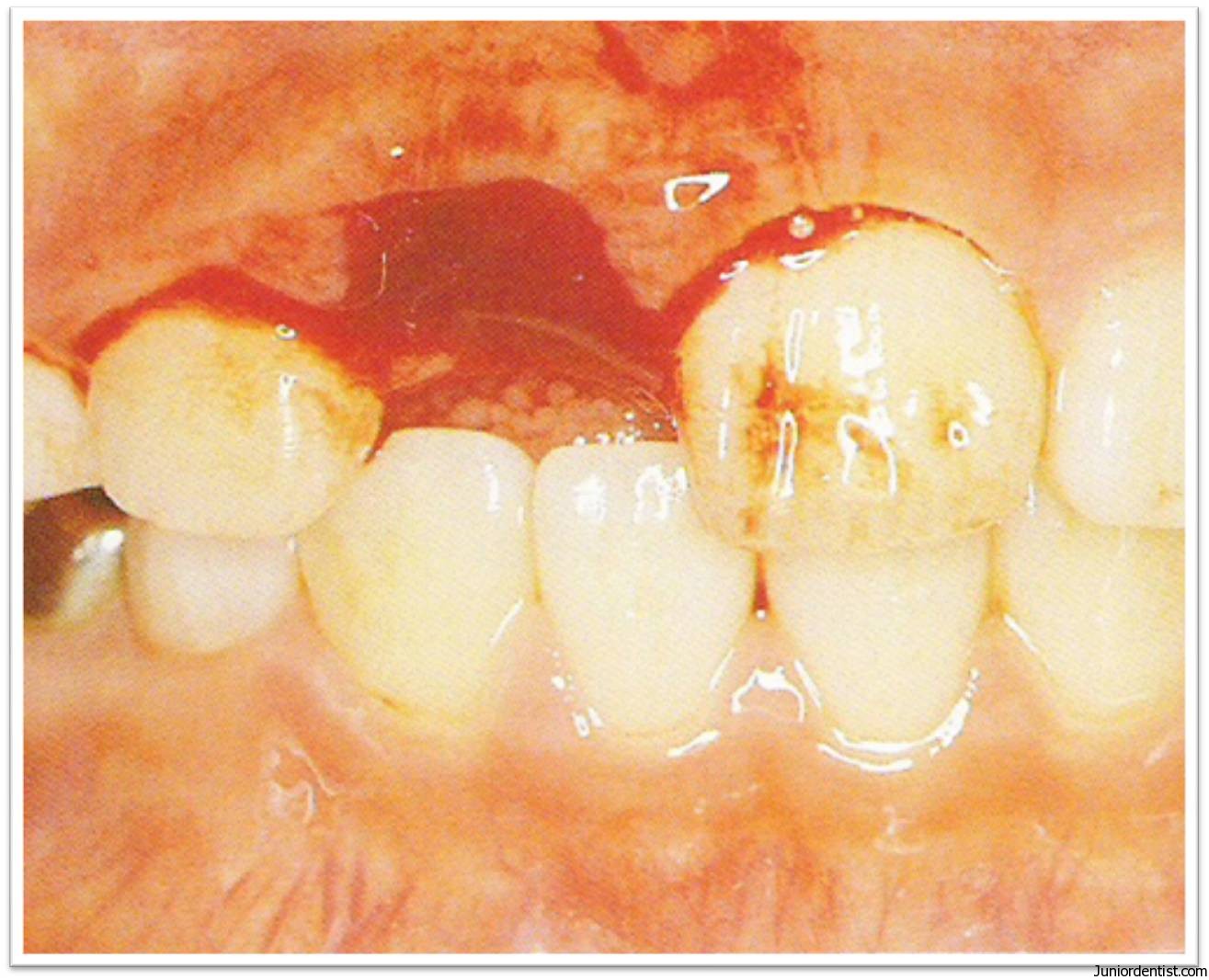
Avulsion of tooth

Simple tips for every patient or parent to follow in case of Avulsion of tooth. Follow these steps and seek dental help as soon as possible with the tooth. 


Detailed description of Avulsion of Tooth for Dentists and patient


Definition: Displacement of tooth totally out of the socket.
Some Facts about Avulsion:
  • Ranges from 0.5 -16% of injuries in the permanent dentition
  • 7-13% in the primary dentition
  • Occurs most often in 7-9 yrs of age.
Etiology:
  •  Fights
  • Sports injuries
  • Falls against hard objects
  • Accidents
Most Frequently Affected areas:
  • Max. CI – Most affected.
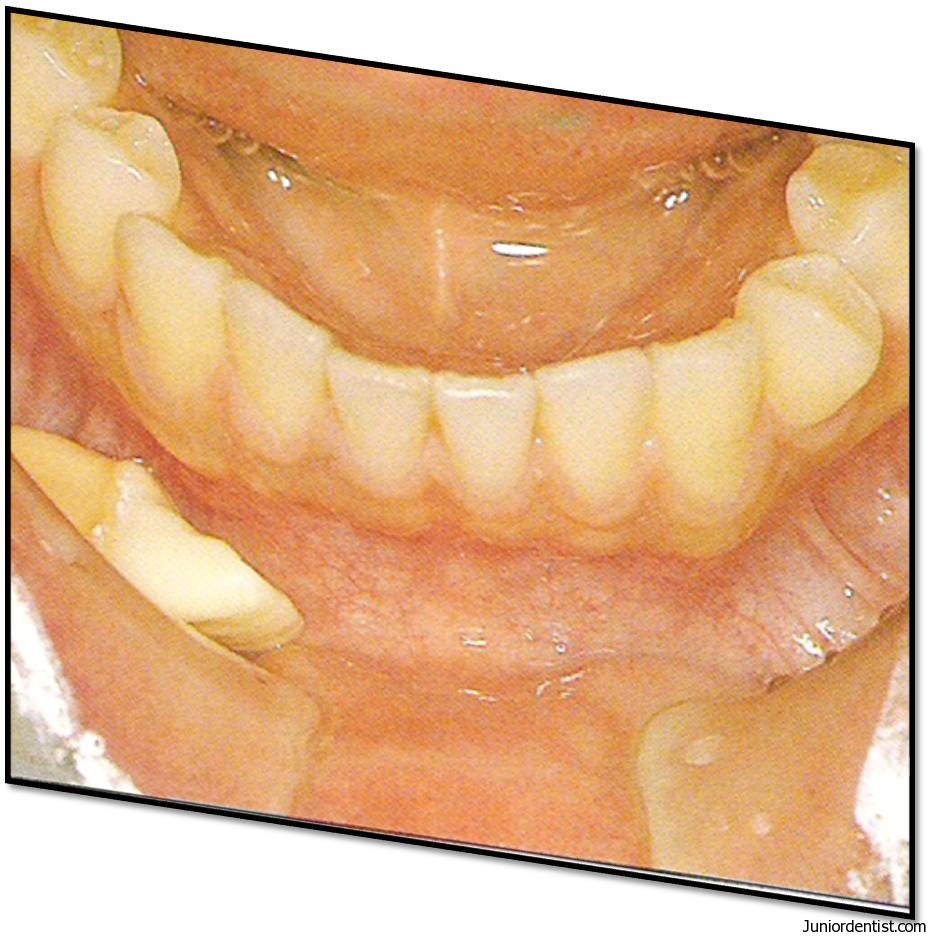
  • Lower jaw – seldom affected.
  • Usually involves single tooth.
  • Associated with lip lacerations and fracture of alveolar socket wall.
Treatment:
This is a true dental emergency because the treatment and prognosis are extremely time dependent.
The main Aim of Treatment Plan is Reimplantation.
Success of Reimplantation depends on:
  • The success of reimplantation is inversely related to the storage material and the time the tooth is out of the mouth.
  • Teeth reimplanted within 30 min have a good chance of surviving, whereas those reimplanted after 2 or more hours have a more limited survival.
The goals of reimplanting teeth:
  • To maintain the viability of periodontal ligament cells
  • The avulsed tooth should be without periodontal problems.
  • To return the cells as close to normal condition as possible.
  • Impede resorption of the tooth.
  • Alveolar socket should be reasonably intact
  • Extra-alveolar period should be considered.
Time within which the teeth should be Reimplanted:
  • After avulsion, the pdl cells are cut off from their blood supply and their stored cell metabolites are depleted.
  • So should be replanted within 60-120 mins.   (Blanoff ,1981)
  • After this time, pdl cells undergo necrosis & root resorption begins.
  • Since teeth are rarely replanted within this time, biologic storage and protection from crushing of pdl cells is of paramount importance.

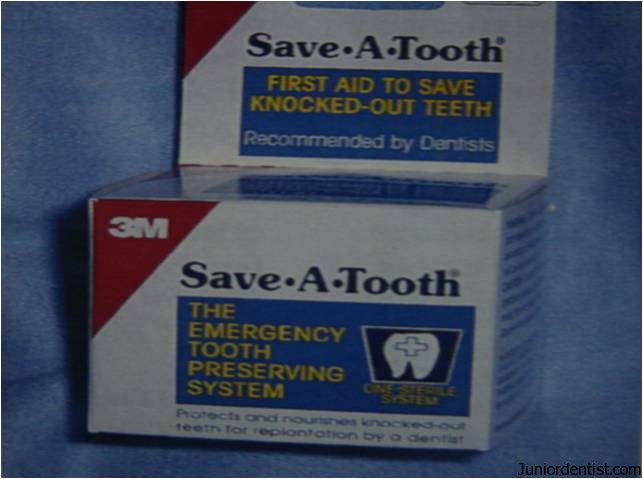
Save a Tooth - Emergency tooth preserving system
Storage Media (For Storing Avusled tooth before reimplantation )
  1. Saline
  2. Milk – Low fat milk preserved pdl cells better than whole milk.
  3. Saliva
  4. Oral vestibule
  5. Hank’s balanced salt solution
  6. Viaspan
  7. Propolis
  8. Tender coconut water
  9. Contact lens solution

Note: Storage of avulsed teeth in water and saliva has been shown to be damaging to the periodontal ligament cells, thus causing increased root resorption. (Andreason. Effect of extra-alveolar period and storage media upon periodontal and pulpal healing after replantation of mature permanent incisors. Int J Oral Surg,1981)
Steps to Follow before Reimplantation of Tooth into socket:
  1. If dirty, the tooth should be grasped by the crown and rinsed gently in saline, tap water or milk at the scene of the injury.
  2. Do not scrub off, brush the tooth or handle the root.
  3. Immediately place the tooth back in the socket and hold in place with light pressure en route to the treating facility.
  4. There is no need to physically debride the socket prior to replacement.
  5. Gentle saline irrigation will remove debris.
  6. If the tooth cannot be replaced at the scene, it should be stored in the buccal vestibule or floor of the mouth for transport.
  7. If this is not possible, the tooth should be stored in a cup with the Hanks Balanced Salt Solution (HBSS), the patient’s saliva, milk, saline or water. Do not wrap tooth in tissue, towel or foil or allowed to dry out.

Reimplantation n splinting - delayed reimplantation
Steps for Immediate Reimplantation Procedure:
  1. Preservation of the avulsed tooth.
  2. Cleansing of the avulsed tooth
  3. Cleansing of the alveolus
  4. Replantation & Splinting
  5. Endodontic treatment
  6. Splinting removal and final RCT
  7. Bleaching or Restorative treatment
Post Reimplantation measures to be taken:
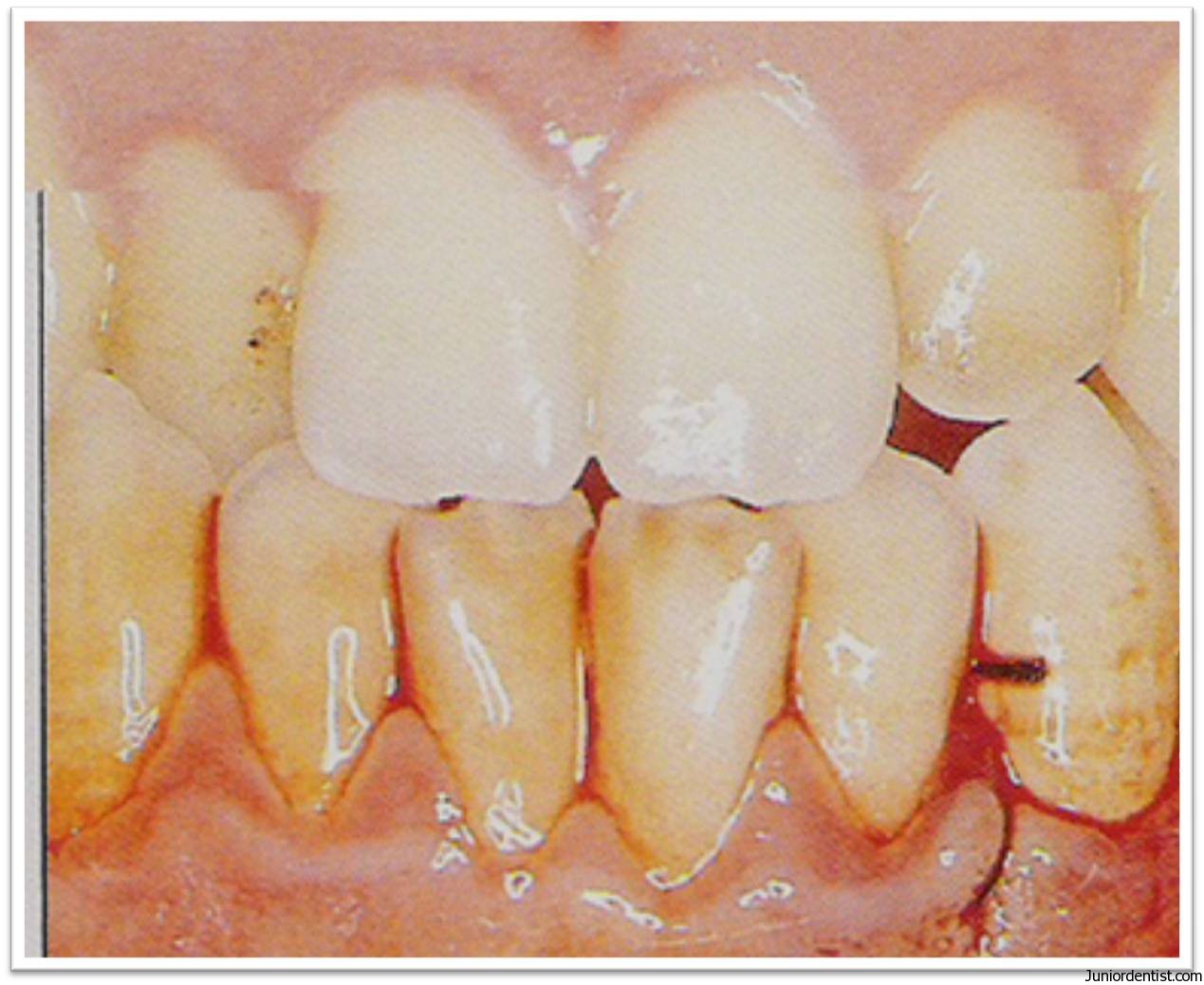
  • Once the tooth is reimplanted in a gently saline-irrigated socket, splint it to the adjacent teeth with a non-rigid or semi-rigid splint for 7–10 days.
  • If a concomitant alveolar fracture is present, maintain the splint for 2–8 weeks.
  • Longer splinting periods are required for more extensive fractures.
In a permanent tooth with an open apex that has been replanted 2hrs after avulsion:
  • Radiographs and clinical exam should be performed in 3–4 weeks to look for evidence of pulpal pathology versus revitalization.If pathosis is noted, root canal therapy should be instituted immediately.
  • The canal should be cleaned and filled with CaOH2 until apexification has occurred (usually 6–24 months).
  • Then obturation with gutta percha is indicated.
For a permanent tooth with a partially to completely closed apex and less than 2 h dry time:
  • The pulp should be removed in 7–14 days.
  • The canal is cleaned and CaOH2 is placed.
  • The new American Association of Endodontics guidelines recommend only 7–14 days of CaOH2 treatment and immediate obturation of the canal with gutta percha and sealer.
For permanent teeth with partially to completely closed apices and greater than 2 h extraoral time:
  • Root canal therapy can be performed immediately.
  • These teeth will eventually be lost to resorption but may be retained short term and are likely to ankylose.
  • The tooth, once the canal has been extirpated extra-orally can be soaked in sodium fluoride solution to discourage resorption once reimplanted.

Do not replant primary teeth.

Antibiotic Prpphylaxis:
Consider tetanus prophylaxis and antibiotics (penicillin VK 500 mg QID, clindamycin 150–300 mg QID or erythromycin 250 mg QID) for 7–10 days and place the patient on a soft diet.
In Case of Delayed Reimplantation:
1. Cleansing  & conditioning of the avulsed tooth

Cleaning n conditioning of Avulsed tooth in delayed reimplantation
2. Extraoral  endodontic treatment

Extraoral RCT for delayed Reimplantation
3. Cleansing of the alveolar socket
4. Replantation and splinting

Reimplantation n splinting - delayed reimplantation
5. Treatment of resorbed replanted tooth

Tuesday, October 16, 2012

NEET Vs State government's


Supreme Court takes over 23 cases against PG medical entrance test


The Supreme Court on Friday transferred to itself 23 cases from various High Courts across the country relating to petitions challenging the National Eligibility & Entrance
 Test (NEET) for admission to post-graduate medical courses from 2013-14.


As per the regulations announced by the Medical Council of India, seats will be allotted from the National list and State-wise merit list prepared by the MCI. Further, 50 per cent of all PG courses will be filled by candidates selected by the State Government.

Andhra Pradesh and Tamil Nadu, several associations of private medical colleges, D.D. Medical College & Hospital, Tamil Nadu, and various individual colleges had filed petitions in the respective High Courts and obtained an interim stay against the applicability of NEET to them.

Aggrieved by these orders, the MCI filed petitions seeking transfer of these cases to the Supreme Court to avoid multiplicity of proceedings.

Monday, October 15, 2012

NEET – MDS Entrance Detailed information 2012-2013


NEET – National Eligibility cum Entrance Examination is the national entrance examination being conducted by AIIMS for admissions into MDS seats all over India for the year 2013.
NEET MDS Examination dates 2013: The suspected dates for NEET 2013 are January. Although there has been no notification by DCI or NBE or AIIMS regarding the date. This is a tentative date.
NEET Examination Pattern: NEET for MDS is being conducted by AIIMS. The examination pattern details have not been notified yet but looking at the Medical Entrance Examination exam pattern, MDS NEET examination pattern will also be the same.
  1. Number of questions: 200
  2. No negative markings
  3. Time: 3 hours
  4. Examination Type: Online / Physical (Should wait for notifications for conformation)
  5. Examinations Centers: Will be updated after the release of official notification


Reservations for Eligibility in NEET MDS Exmaination Seat Allocations/Counselling: 
The marks will be sorted out into Percentile and for qualifying into counselling the following minimum percentiles should be obtained by each category of Students:
  1. General Students: 50 Percentile
  2. Backward Casts- SC/ST – 40 Percentile
  3. Locomotory Disability of Lower Limbs: 45 Percentile

Dentists who have worked under State and Central Government Service in Villages will be given 10%-30% additional marks based on the location of their work.
50% of PG Diploma courses shall be reserved for students who have served the State/Central Government for 3 years or more in remote areas.
3% seats will be allotted to students with locomotion disability of 50-70% of lower limbs. In case the allotted 3% seats are not filled by students with 50-70% disability these seats will be filled by students with 40-50% disability
What is Percentile ? How is Percentile calculation done in NEET MDS Entrance ?
The highest marks obtained by a student will be termed as 100 Percentile and the next highest number of marks will be termed as 99% percentile and so on.
Seat Allocations in All India Merit Entrance NEET – MDS 2013:
  • 50% (Fifty Percent) of Total seats shall be allotted by counselling by the concerned State or National authority in Non- Government Dental Colleges.
  • 50% (Fifty Percent) of total seats shall be allotted by the respective colleges based on the merit list prepared by the National Eligibility-cum-Entrance Test
  • 50% of PG Diploma courses shall be reserved for students who have served the State/Central Government for 3 years or more in remote areas.
  • 3% seats will be allotted to students with 50-70% locomotory disability.
How will the Ranks be allotted:
  • All India Merit List/Rank: It is the rank which will be allotted to you on the National ranking system. It is the National rank. Which will be used to take seats in National level in States other than your Native State.
  • State wise Merit List/Rank: It is the rank allotted to you based on the competition in your native state. It is the State Rank.
What is the Native State, How do i know which state i should be writing from in NEET MDS entrance:
  • There are many students who are native of one state and completed BDS from another state. Remember this point:
  • You should write your Entrance examination from the State where your family has been residing for the past 5-7 years. Even if you have studied in a different state for the past 5 years the residential address of your parents will be considered.
  • Some states allow Domicile Criteria: Where some students who have domicile for a particular state inspite of having their graduation degree from another state will be allowed to take up PG in the respective state colleges.
LINK TO NATIVITY NOTICE STATE/NATIONAL MERIT LIST:

Sunday, October 14, 2012

Egyptian-style


Dentistry, ancient Egyptian-style: Mummy found with teeth stuffed with linen in attempt to cure agonizing tooth-ache


  • 1)Experts believe man from Thebes died in excruciating pain.

  • 2)Researchers found linen 'filling' dipped in medicine inside infected tooth
  • Say find could prove that dental experts were constantly trying new techniques.


Scientists performing CT scans on the head of an Egyptian mummy say they have found one of the worst cases of dental problems ever seen - an a unique treatment to try and treat it.
Researchers CT scanning a 2,100 year old mummy were stunned to find evidence of a sinus infection caused by a mouthful of cavities and other tooth problems.
The also came across a unique find - a cavity filled with linen.
Researchers used a CT scanner to see inside the man's mouth, and created a 3D reconstruction showing the worn incisors
Using a piece of linen, which may have first been dipped in a medicine such as fig juice or cedar oil, a form of 'packing' in the biggest and most painful cavity, located on the left side of his jaw between the first and second molars, was inserted.
This acted as a barrier to prevent food particles from getting into the cavity, with any medicine on the linen helping to ease the pain, the study researchers said. 
The man, whose name is unknown, was in his 20s or early 30s, and lived at a time when Egypt was ruled by a dynasty of Greek kings.


    Andrew Wade, at the University of Western Ontario, used new high-resolution CT scans of his teeth and body, according to the International Journal of Paleopathology. 
    Researchers said this is the first known case of such packing treatment done on an ancient Egyptian. 
    'The dental treatment, filling a large inter-proximal cavity [a cavity between two teeth] with a protective, likely medicine-laden, barrier is a unique example of dental intervention in ancient Egypt,' the team writes in their journal article.
    'The dental packing described here is unique among ancient Egyptian mummies studied to date, and represents one of only a few recorded dental interventions in ancient Egypt.
    CT scans of the entire mouth were carried out to allow the researchers to recreate a 3D version. The linen filling can be be seen on the right of the mouth
    CT scans of the entire mouth were carried out to allow the researchers to recreate a 3D version. The linen filling can be be seen on the right of the mouth

    DENTISTRY IN EGYPT

    Dentistry was relatively commonplace in Egypt, and records indicate that it was being practiced at least as far back as when the Great Pyramids were built. 
    However, this finding has led researchers to believe experts may have practiced advanced techniques.
    Dental problems were not unusual, as the coarsely ground grain ancient Egyptians consumed was not good for the teeth.
    The team say the find add weight to the theory that dentists were commonplace in Egypt.
    'Such a finding lends further support for the existence of a group of dental specialists practicing interventional medicine in ancient Egypt. 
    'While the physical evidence, to date for other interventions, may be scarce, the findings presented here should underline the need to continue to look for evidence of dental packing as well as other therapeutic dental interventions in the ancient world.'
    The small linen mass was initially found during a scan in the mid-1990s, but the scanning resolution of the time was too low to allow a full analysis. 
    The high-resolution scanner his team used for their latest study was six times as powerful.
    The young wealthy man from Thebes was nearing the end of his life when his dental problem hit, researchers believe.
    The man, whose name is unknown, was in his 20s or early 30s, and had 'numerous' abscesses and cavities, conditions that appear to have resulted, at some point, in a sinus infection, something potentially deadly, the study researchers said, although they could not pinpoint his cause of death.

    THE MUMMY WITH NO NAME

    The 3D reconstruction was made from data collected during high resolution CT scans of the mummy.
    The 3D reconstruction was made from data collected during high resolution CT scans of the mummy.
    When he died he was mummified, his brain and many of his organs taken out, resin put in and his body wrapped. 
    Embalmers left his heart inside the body, a sign perhaps of his elite status, researchers say.
    After being mummified he was likely put in a coffin and given funerary rites befitting someone of his wealth and stature. 
    Where he was laid to rest in Thebes isn't known, as his body was not seen again until 1859 when James Ferrier, a businessman and politician, brought the mummified body (the whereabouts of the coffin is unknown) to Montreal, where today it lies in the Redpath Museum at McGill University.
    Experts say the pain the young man suffered would have been excruciating, and say his problems would have been a 'serious health risk' for modern dentists.
    Despite the help, he succumbed shortly after, perhaps in just a matter of weeks.
    Dentistry was nothing new in Egypt, ancient records indicate that it was being practiced at least as far back as when the Great Pyramids were built.
    Dental problems were also not unusual, the coarsely ground grain ancient Egyptians consumed was not good for the teeth.
    CT scans allowed the team to examine the filling in far greater detail than ever before.
    CT scans allowed the team to examine the filling in far greater detail than ever before.

    CT slices showing the wear of the left first (left) and second right (right) incisors of the mummy
    CT slices showing the wear of the left first (left) and second right (right) incisors of the mummy


    NEET FOR MDS!!!

    FAQS ON NEET MDS ENTRANCE EXAM .... 


     LATEST UPDATE :
       NEET MADE OFFICIAL BY DCI FOR THE MDS SEAT ENTRANCE ON ALL INDIA BASIS . DOWNLOAD THE OFFICIAL NOTIFICATION HERE : 


     For all Dental Students : NEET for MDS Entrance MDS Entrance Exam for MDS Seats Admission 2013.Entrance Exam for MDS seats admission session 2013, on All India Basis shall be conducted by AIIMS.

     Announcement in this regard shall be made by AIIMS, New Delhi.
     The Official Site of NEET has given the rules of Exam mostly in relation to MS/MD . Its being said that the rules for MDS Exams will be same .
     But We should see for the final Notification by AIIMS for the NEET MDS Entrance . See this Note that will be constantly updated Official NEET Website : http://www.nbe.gov.in/neetpg/


    PLEASE NOTE : 

    MDS Entrance Exam for MDS Seats Admission 2013 Entrance Exam for MDS seats admission session 2013, on All India Basis shall be conducted by AIIMS. Announcement in this regard shall be made by AIIMS, New Delhi. 


    Q Is there a single common exam for MDS henceforth ?A Yes , There will be a single common entrance exam for the year 2013-14 . It is called NEET - National Eligibility cum entrance test for admission to postgraduate course .

    Q What is the eligibility basis for admission through NEET ? A In order to be eligible for admission in any postgraduate course through NEET , the candidate must obtain a minimum of marks at 50th percentile . For SC, ST and other backward tribes the eligibility would be a minimum of 40th percentile . For physically disabled candidates it would be 45th percentile .

    Q Does it mean there is no COMED or CET etc ??A There has been no mention of non existence of private bodies for councelling , as per the gazette and its notification , there will be a single entrance exam NEET . In private colleges , 50 % of the seats shall be filled in by the state or the authority appointed by them and the remaining 50 % of the seats to be filled on the basis of merit list prepared as per the marks obtained in NEET .

    Q What is the last date for admissions ?A According to the notification , the classes for the postgraduate courses should begin by 2nd May and all admission procedure should end before 2nd may.

    Q How many seats will be available this year ?A There is no notification on the number of seats that will be available .

    Q Will there be a single councelling for admissions ?A Again , there is no notification on the pattern of councelling , although it has been mentioned in the gazette that there will two types of merit list , one on nation wide basis based on the marks obtained through NEET and state wise merit list . So this means that the marks obtained through the single NEET exam will be used in multiple ways like state wise or college wise .

    Q Is there any increase in fees or is there a common fees too ?A No special mention on the fees , will have to wait for a notification on the fees .

    Q Im from Maharashtra , can I take up a seat in karnataka ?A As there is a state wise list , so a residency rule may apply , that only that state residents can take up a seat through the state wise merit list , although for a nation wise list , one can take up seat anywhere .

    Q What about the syllabus and exam pattern?
    A There is no specific information on syllabus, but it can be assumed that syllabus will not change. Although pattern or marks distribution may change but there is no official update on that yet.
    NEET UPDATE ON THE MERIT LIST OF ENTRANCE EXAM :*All the PG seats will be filled by NEET Entrance marks .
    *Ranks will be published in 2 ways STATE WISE MERIT LIST & NATIONAL MERIT LIST . We will discuss both . Read below .
    State wise Rank : 50% of total seats in that state .
    These will be filled by the merit list drawn from NEET. For eg if U are from Rajasthan , A separate list will be prepared as per the marks in NEET of all students from Rajasthan . And from that state list 50 % state seats will be filled as per the ranking .
    *Remaining 50% of the seats will be filled from the national merit list.
    So from the last example , if U r from Rajasthan & u couldn't get a seat in Rajasthan in the state merit list .U still have a chance to get a seat in the national merit list . But u may have to join another college in another state as per ur rank .
    N.B : To be eligible for seat selection a candidate need to score 50 percentile or above . 

    dental blogs